Metrowire Media St. Louis

Redrawing North St. Louis: The high-stakes land push around NGA

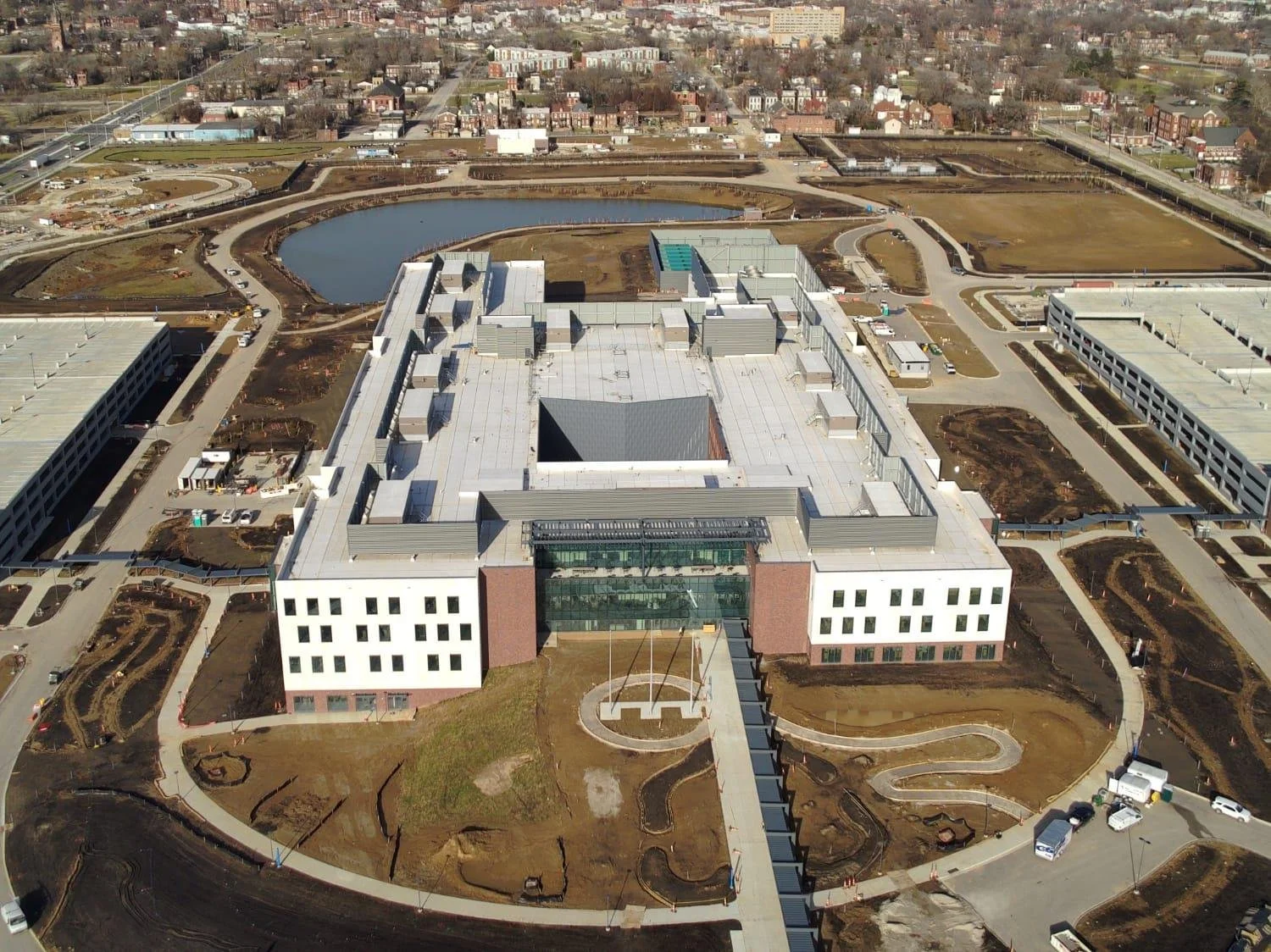
As the National Geospatial-Intelligence Agency (NGA) opens its $1.7 billion western headquarters in north St. Louis, the city has entered a new and contentious phase of redevelopment: the use of eminent domain to reshape the long-struggling neighborhoods surrounding the campus.

City officials are moving to acquire nearly 90 vacant and blighted parcels near the NGA site, arguing that fragmented ownership and years of stalled redevelopment have left the area unable to attract meaningful private investment. Most of the targeted properties are tied to NorthSide Regeneration, the development entity that once promised sweeping revitalization but delivered little visible progress over more than a decade.

Supporters of the eminent domain push say the timing is critical. The NGA campus, one of the largest federal investments in St. Louis' history, is expected to bring thousands of daily workers to the area. Without coordinated land assembly and infrastructure upgrades, officials fear the surrounding neighborhoods could miss a once-in-a-generation opportunity to benefit from the federal presence.

The plan, approved by the St. Louis Board of Aldermen in 2024, limits eminent domain to vacant, unoccupied, or nuisance properties, explicitly excluding occupied homes and active businesses. City leaders have emphasized that the intent is not displacement, but momentum — clearing legal and physical barriers that have prevented redevelopment from taking hold.

Still, the move has reignited long-standing debates about trust, equity, and the role of government in redevelopment. Critics argue that eminent domain, even when narrowly applied, risks repeating past mistakes that hollowed out north St. Louis under the banner of progress. Others question whether the city can deliver on its promise of inclusive growth after decades of unrealized plans.

Legal challenges from property owners are expected, which could delay redevelopment efforts and complicate the city’s timeline. Yet proponents maintain that decisive action is necessary to avoid stagnation around one of the region’s most significant economic engines.

Beyond the legal arguments, the moment represents a crossroads for St. Louis. The NGA headquarters offers a rare chance to reconnect north St. Louis to the city’s economic future. Whether eminent domain becomes a catalyst for long-awaited revitalization — or another chapter in a complicated redevelopment history — will depend on how transparently and responsibly the next steps unfold.


Header image: The National Geospatial-Intelligence Agency opened its new campus in St. Louis September 26, 2025 Image | NGA

Demolition of the Millennium Hotel marks the beginning of Cordish’s major redevelopment

Demolition is officially underway at the former Millennium Hotel site in downtown St. Louis, signaling the tangible start of a long-planned transformation of the 28-story complex. The project is being led by The Cordish Companies, which was selected earlier this year by the Gateway Arch Park Foundation.

At an estimated cost of $670 million, Cordish’s proposed redevelopment spans roughly 1.3 million square feet and is set to include a mix of upscale residential units, Class A office space, a food hall, public event space, and an outdoor amphitheater. The plan also calls for dedicated public amenities such as landscaping, pedestrian-friendly walkways, art installations, and possibly even a facility to house the Gateway Arch National Park’s archives.

The Land Clearance for Redevelopment Authority recently gave the green light for Cordish to proceed as developer, accelerating key pre-construction steps. The Gateway Arch Park Foundation, which holds ownership of the site, has coordinated the effort alongside several public and civic partners—including the St. Louis Development Corporation (SLDC), Greater St. Louis, Inc., and planning and design experts such as PGAV.

To carry out the demolition, the Foundation has contracted Spirtas Wrecking Company and Environmental Operations Inc., which completed remediation of hazardous materials before structural teardown began. The work is being done in phases: the central tower was tackled first, followed by the south tower, and ultimately the north tower.

Officials estimate the demolition process will take one to two years to fully clear the site. Once cleared, Cordish is expected to break ground on construction, though the precise timing for full development has not yet been publicly announced.

Beyond the physical redevelopment, the Gateway Arch Park Foundation is also launching a community-driven story-collecting initiative to preserve the memories tied to the former hotel. The effort is aimed at archiving oral histories, photographs, and personal reflections, linking the site’s past to its future.

Taken together, the project—backed by Cordish, the Gateway Arch Park Foundation, SLDC, Greater St. Louis, Inc., and planning partners—promises to reimagine a key downtown location. It aims not only to deliver commercial and residential value, but also to strengthen connections between the Gateway Arch, Ballpark Village, and the heart of downtown St. Louis.


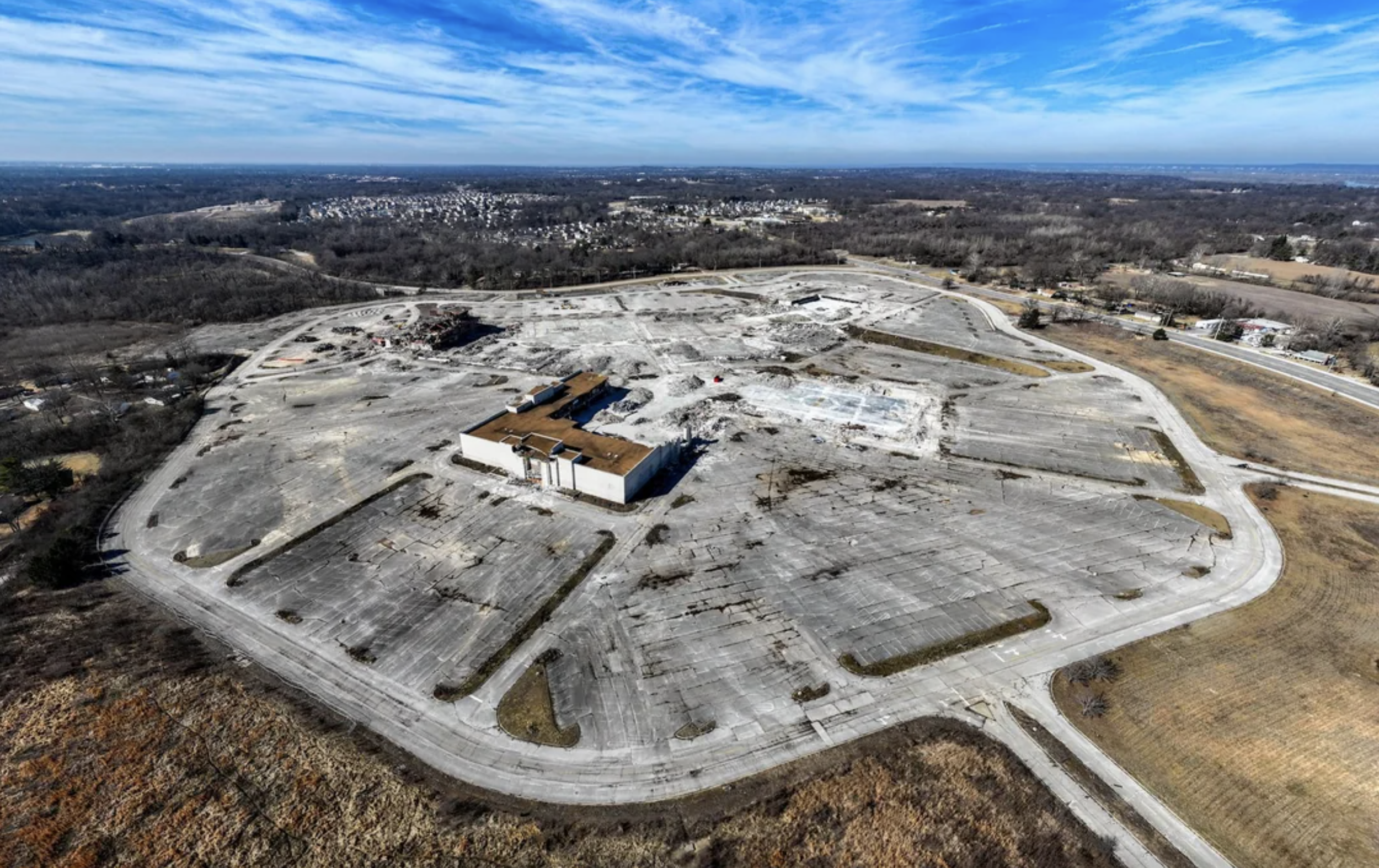
Header image: Spirtas Wrecking along with Environmental Operations Inc. begin demolition of the Millennium Hotel in Downtown St. Louis. Photo | The Gateway Arch Park Foundation

The Relocation of Anthem Signals New Life for St. Louis Office Market

On Monday, Anthem Blue Cross Blue Shield formally opened its new downtown St. Louis office, relocating approximately 500 employees into the Deloitte Building at 4th and Market. The move places a significant workforce at the core of the city’s business district and signals a strong vote of confidence in the downtown environment.

The relocation aligns with a broader shift in corporate real‑estate strategy, one where the office is being reimagined rather than discarded. Even as hybrid and remote work models become prevalent, organizations like Anthem are choosing to invest in high‑visibility, amenity‑rich urban settings. Moving into a modern office within downtown St. Louis rather than maintaining a dispersed suburban footprint reflects an understanding that companies still value physical workplace hubs that foster culture, collaboration, and connectivity.

From a commercial real estate perspective, this lease adds meaningful vitality to the local office market. The Deloitte Building spans roughly 260,000 square feet, and Anthem’s new space represents a significant tenant commitment of approximately 45,600 square feet. Because many firms have reduced footprint or remain cautious about long‑term leasing commitments, a move of this size exhibits market confidence and encourages landlords and developers to enhance building offerings.

Beyond the building itself, the ripple effects extend into the downtown economy. The arrival of 500 employees translates into expanded demand for nearby restaurants, retail stores, parking, transit, and support services. It strengthens the urban ecosystem and helps attract additional employers who seek access to a vibrant city centre, a talent‑friendly address, and proximity to amenities. With more corporate activity in the core, downtown becomes not just a workplace location but a destination.

While remote work continues to evolve, the office is no longer simply a place to house everyone every day. Instead, it becomes the environment where teams converge, innovate, and connect. Anthem’s move reflects this reality by choosing high‑quality space in a central location. For downtown St. Louis, the significance is clear: this is a tangible anchor tenant that can spur momentum, creating further leasing activity, encouraging building renewals, and affirming the city’s competitiveness in the post‑pandemic office era.


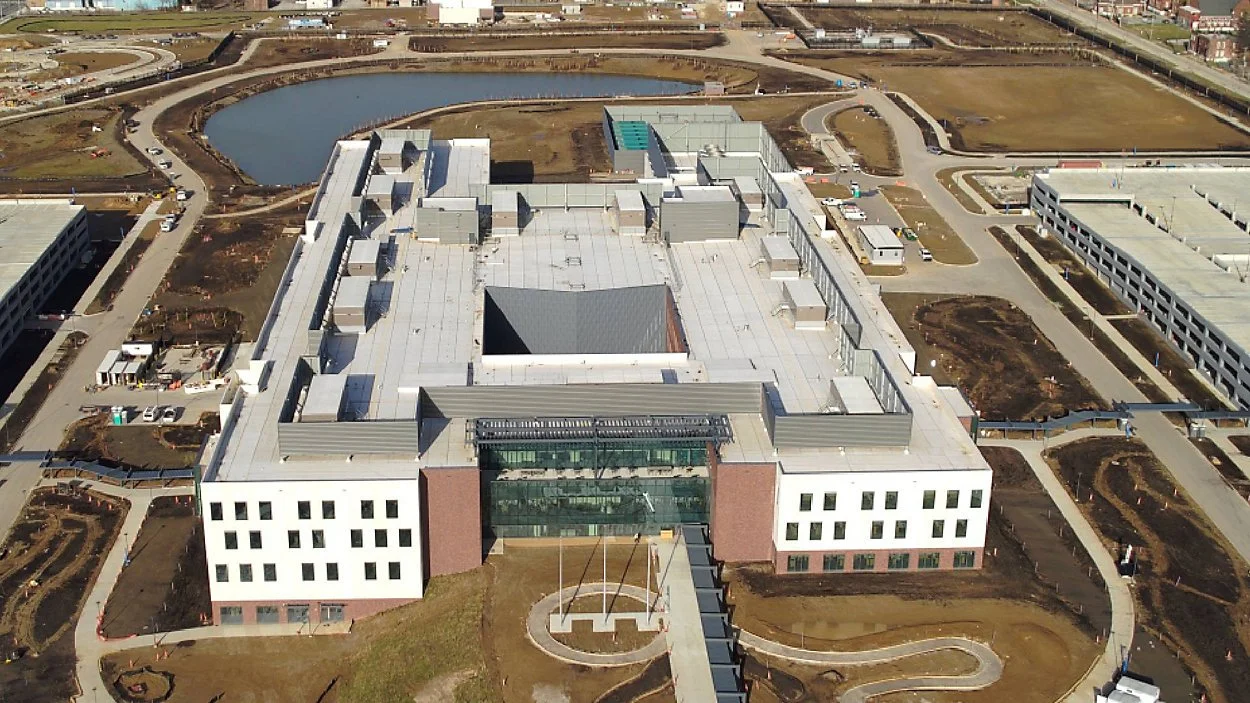
Header image The Deloitte Building is now home to over 500 Anthem Blue Cross and Blue Shield employees. Photo | Sansone Group

AIA St. Louis honors 2025 design award recipients for excellence in architecture and craft

The American Institute of Architects (AIA) St. Louis Chapter celebrated outstanding design achievement during its 2025 Design Awards, held at the Center of Contemporary Arts (COCA). The annual event recognizes exemplary projects in architecture, interiors, unbuilt work, small projects, drawings, and craft.

This year’s jury was led by distinguished professionals, including Maija Kreishman, FAIA, principal at Michael Hsu Office of Architecture, who chaired the Architecture and Unbuilt categories; Timothy Trotter, president of TROCOFAB, serving as Craft Jury Chair; and Perry Kulper, professor at the University of Michigan’s Taubman College of Architecture and Urban Planning, who chaired the Drawing category.

ARCHITECTURE AWARDS

Distinguished Award – Social Progress

DOORWAYS Housing & Administration

Trivers

Client: DOORWAYS | General Contractor: BSI Constructors | MEP Engineer: G&W Engineering | Structural Engineer: KPFF Consulting Engineers | Civil Engineer: Civil Design, Inc. | Landscape Architect: Arbolope Studio | Photography: Sam Fentress; Serhii Chrucky / ESTO

Distinguished Award – Adaptive Reuse

Russ Burns Building – Clayco Home Office

Lamar Johnson Collaborative (LJC)

Client: Clayco, Inc. | General Contractor: Clayco, Inc. | Structural Engineer: Uzun + Case | Civil Engineer: Stock + Associates | Plumbing Engineer: G&W Engineering | Signage & Artwork: KO & Company | Custom Millwork: Martin Goebel | 3D Print Artwork: Printerior | Interior Plantings: Ambius | Photography: LJC; Eric Laignel

Honor Award

Market Center of the Ozarks

Patterhn Ives LLC

Client: Northwest Arkansas Food Systems | General Contractor: CDI Contractors | Civil & Landscape: Ecological Design Group | Structural Engineer: Martin/Martin Engineers | MEP Engineering: HSA Engineering | Lighting: H2LTG | Signage & Graphics: Design Ranch | Photography: Sam Fentress

Merit Award

SCAD River House

Mackey Mitchell Architects

Client: Savannah College of Art and Design | General Contractor: Clayco, Inc. | Landscape Architect: Mandel Design, LLC | Structural Engineer: Tharpe Engineering Group | Civil Engineer: Hussey Gay Bell | Mechanical/Electrical/Fire Protection: Salas O’Brien | Lighting: Power Design | Photography: Sam Fentress

Above: Interiors Merit Award winner- a warm and welcoming reception. 4300 E. Camelback by Lamar Johnson Collaborative. Photo | LJC

INTERIORS AWARDS

Honor Award

The Clover at Olive Crossing

HOK

Client: Keeley Properties & KEAT Properties | General Contractor: Keeley Construction | Furniture Dealer: Continua | Photographer: Alise O’Brien

Merit Award

Kings Hill | Brown & Crouppen

HOK

Client: Third Man Development | General Contractor: Paric Corporation | Structural Engineer: KPFF | MEP Engineer: Design-Build | Furniture: CI Select | Demountable Partitions: Maars Living Walls | Photography: Sam Fentress

Merit Award

4300 E. Camelback

LJC

Client: Clayco, Inc. | General Contractor: Stevens Leinweber Construction | MEP Engineer: Energy Systems Design | A/V Engineer: Coltrane Systems | Interior Design: Lamar Johnson Collaborative

UNBUILT AWARDS

Distinguished Award – Community Impact

“The Glade” – Steinberg Pavilion and Rink Reimagined

Christner Architects (Prime Architect) and Snow Kreilich Architects (Design Architect)

Client: Forest Park Forever | General Contractor: BSI Constructors | Landscape Architect: Hoerr Schaudt | Structural: KPFF | Civil: David Mason & Associates | Lighting: RBLD | Community Engagement: Vector Communications | Renderings: Snow Kreilich; Hoerr Schaudt

Honor Award

Caroline Residence

No Other Way

Client: Confidential

Merit Award

Powell Hall Renovation and Expansion

Christner Architects and Snøhetta (Design Architect)

Client: St. Louis Symphony Orchestra | General Contractor: BSI Constructors | Structural: KPFF | MEPFP: McClure Engineering | Civil: David Mason & Associates | Theatre Planning: Schuler Shook | Acoustics: Kirkegaard | Lighting: Reed Burkett | Renderings: Snøhetta

DRAWINGS AWARDS

Honor Award – Walls of Washington — AVV A

Honor Award – Of Earth, Water and Sky — Cody Heller

Merit Award – On an Open Field — Nneoma Asinugo

CRAFT AWARDS

Honor Award

Structural Brick Arches in Contemporary Chapel

HKW

Client: Saint Louis University | General Contractor: BSI Constructors | Falsework Contractor: BSI Constructors | Masonry Contractor: John Smith Masonry


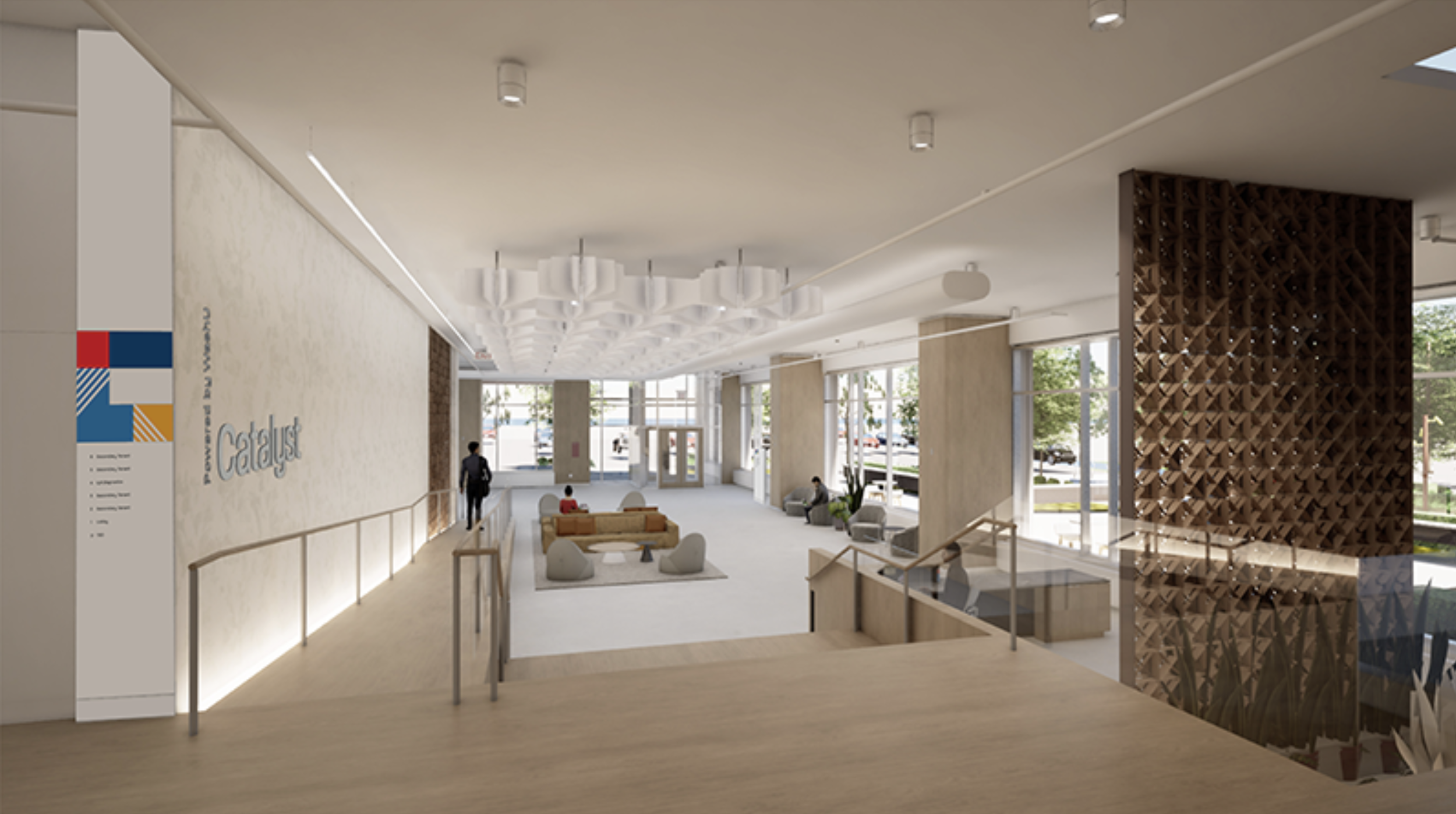
Header image: Architecture Distiguished Award winner for adaptive reuse. Russ Burns Building | Clayco home office. Photo | .LJC - credit: Eric Laignel